

Today I talked to David
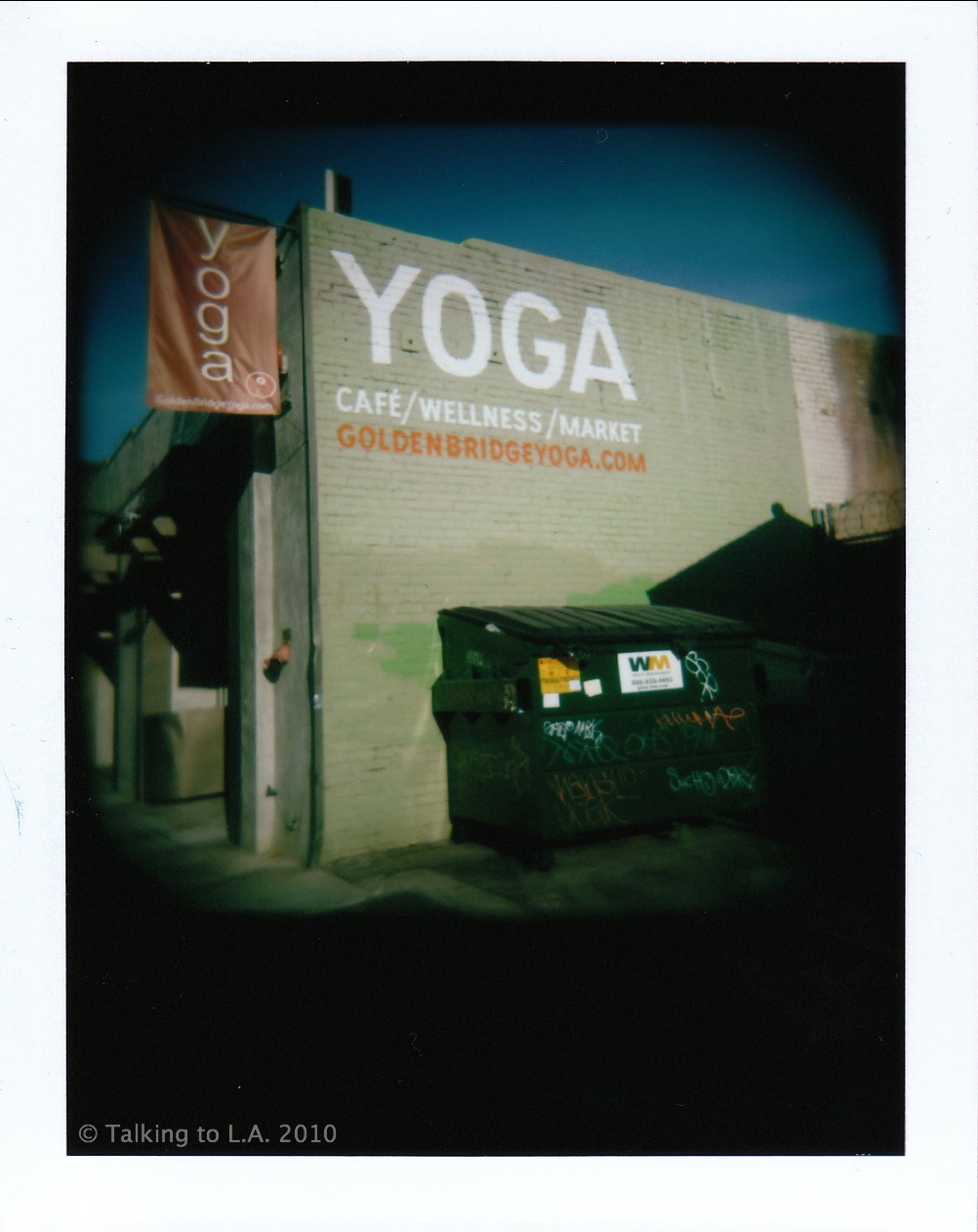
This is the end of the afternoon. The streets are cooling down after a hot day, and the sun is slowly turning orange. I push the door of the Golden Bridge Yoga center. An electric Indian music fills up the almost empty space. I walk through the library-restaurant where two girls are eating pastries and talking over scented tea. On the other side of the shop, I see a spacious yoga studio. It is empty too, except for a man meditating on a mat. I pick up a book - Krishnamurti to Himself: His Last Journal - and read the back cover. A young man appears from behind a curtain. His blond curly hair is covered with a cloth. He wears thin metal-framed glasses, a long red apron, and red Adidas sneakers. We share a few words about my camera and I show him a picture I just took in the street. A woman passes by. We suspend our conversation. After a pause, he asks: "Hey, you want to take a picture of this?" He opens up a thick curtain that reveals a narrow kitchen. He enters and I follow him inside. "I'm making cinnamon rolls," he adds. I see flour spread on the table and dough in a metallic bowl.
 His name is David. He works here as the assistant to the pastry chef and teaches yoga when he can. He loves to cook because it makes him feel more grounded. He tells me that he is aware that his thoughts are transmitted to the food while he is cooking. I notice a man sitting next to the curtain and wonder if he is listening to our conversation, but he seems mesmerized by his book. David grabs a rolling pin, removes the flour stuck on it, and rolls out the dough. I ask him how he got here. "A year ago I began to meditate and focus constantly my attention on working here. I wanted to cook vegan food and practice yoga at the same time. And it worked! I've been working here since December," he says with a sparkle in this smile. David's movements are harmonious and composed. He delicately spreads the cinnamon mixture all over the dough with a spatula and rolls up the dough into a long baguette. At that moment, a blond girl pops her head through the curtain and stares at us for a short moment. "Hi," says David. "Oh sorry," utters the girl. Her head disappears.
Initially David is from Portland, Maine. He was making sandwiches, working as a dishwasher seven days a week, and partying a lot when he realized his life needed a change. He began practicing yoga three to four hours a day. Then, he went to Esalen in Big Sur, California. In this center, people can learn and practice different spiritual arts, techniques, and therapies. David studied Kundalini yoga, meditation, shamanism and some martial arts during one year. "I miss my friends from Portland but that life wasn't healthy for me anymore," he says. He cuts the long roll into slices and creates a ball with each piece. Then he puts the balls on a translucent paper and starts all over again with a new piece of dough.
"As humans we have to evolve because initially we're hunters. When I meditate I feel part of the infinite, the ocean. I feel one. When you experience this, it makes you feel so small and humble. It changes you. Even if you experience it only once," he says. "I think this is why people do drugs. That's a way to experience the infinite. I tried this too. It worked a few times but it's not sustainable," he adds with a smile. Then he wipes his hands on his apron and turns towards me. "Today, I feel really blessed."


